Last year Marriott announced another wave of hotel expansion across Europe, the Middle East, and Africa: its strongest year yet in the region, with 170 new properties and over 31,000 rooms signed. Alongside that, hospitality investment kept growing in Saudi Arabia, the UAE, and Southeast Asia, and international tourism climbed back to pre-pandemic levels.
None of this is really about hotels. It's about how much food service infrastructure has to exist behind the scenes to support that kind of growth.
What Happens Behind the Plate
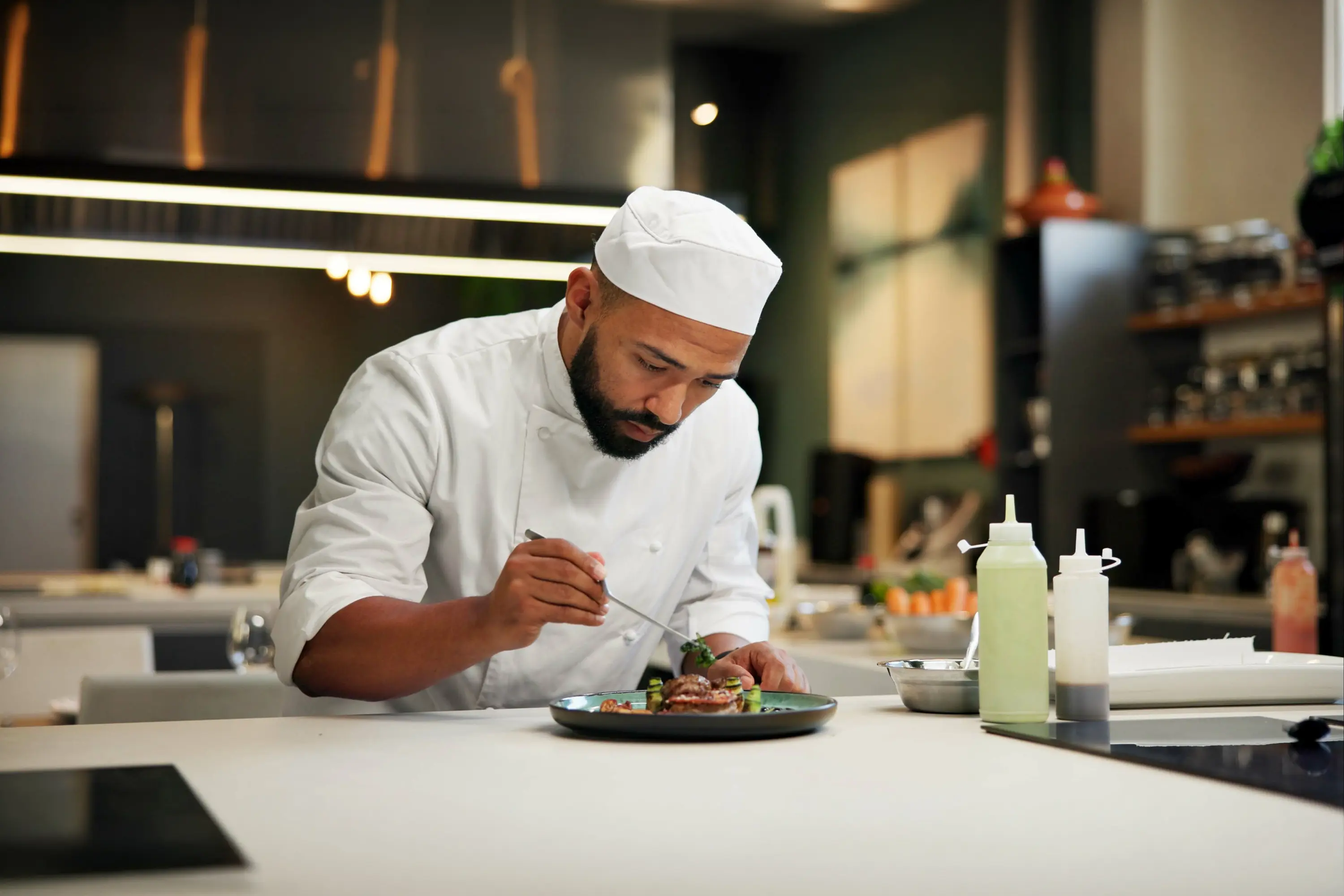
When a new hotel opens, people notice the architecture, the rooms, the restaurants. Almost no one thinks about what keeps those restaurants running, or that the same operational challenge shows up in airlines, cruise ships, resorts, hospitals, and food delivery brands. Customers see the final plate. Behind it is an operation that has to hit the same quality bar every day, control cost, manage waste, hold food safety standards, and coordinate large teams under pressure.
That's the part of the industry most students never get shown.
"Culinary Arts" Still Gets Read as "Becoming a Chef"
It's an understandable assumption, and it's increasingly out of date. Food touches nearly every part of modern life: hotels, airports, hospitals, supermarkets, stadiums, corporate campuses, retail. As these sectors grow, they're hiring for people who understand both the craft of food and the business that sits underneath it. That combination is exactly what Culinary Arts & Kitchen Management programmes are now built around.
A Commercial Kitchen Runs Like a Business, Because It Is One
Good recipes aren't the hard part anymore. Stock needs to arrive on schedule. Food cost has to stay in range. Hygiene standards can't slip. Teams need to move in sync under real time pressure, and customers expect consistency every single service. Now imagine holding all of that at scale.
Technology has changed the pace too. Most kitchens now run on digital ordering, inventory software, and data to plan menus, and there's more focus than ever on sourcing responsibly and cutting food waste. Cooking is still the core skill. But running a kitchen well today also means thinking like a business operator.
Programmes Are Catching Up
Modern Culinary Arts & Kitchen Management courses reflect that shift. Alongside classical and international technique, students are learning kitchen operations, menu planning, food costing, procurement, food safety, and hospitality management, not just how food is prepared, but how food businesses actually succeed. Training kitchens, restaurant simulations, internships, and industry placements exist specifically to close the gap between classroom learning and what a real service night demands.
One Field, Many Career Paths
Restaurants are still part of it, but they're only one piece of a much bigger picture. Graduates end up in:
- Hotels and airline catering
- Cruise ships and resorts
- Bakeries and food manufacturing
- Retail and event catering
- Cloud kitchens and hospitality consulting
- Product development and food styling
- Teaching, food media, or running their own venture
What ties it all together isn't the ability to cook. It's the ability to run food operations that people can rely on.
What Actually Builds a Career Here
Hospitality rewards consistency, not a fast start. The people who last communicate well, stay calm under pressure, and notice what customers don't. Leadership here gets proven during the busiest service, not after it.
That same pattern is playing out globally: countries like the UK, Australia, New Zealand, Ireland, Singapore, Malaysia, the UAE, and Switzerland continue to invest heavily in hospitality and food innovation, which means the demand for people who combine culinary skill with business and operational knowledge is only going to grow.
The bigger shift isn't happening in the kitchen. It's happening in how we think about what a career in food actually looks like. Culinary Arts & Kitchen Management isn't preparation for a job behind a stove anymore. It's preparation for a career that sits at the intersection of hospitality, business, technology, and entrepreneurship.
If You're Exploring This Field Right Now
...the operations side of it rarely gets shown in a typical prospectus. That's exactly what our events are for: real conversations with university reps and current students about what a training kitchen, an internship placement, and a real service night actually involve. See what's coming up.